Why the Equipment Floater Exclusions That Killed Your Robot Fleet Claim Were Never Going to Hold
Standard equipment floaters were built for tools, not autonomous machines that decide.
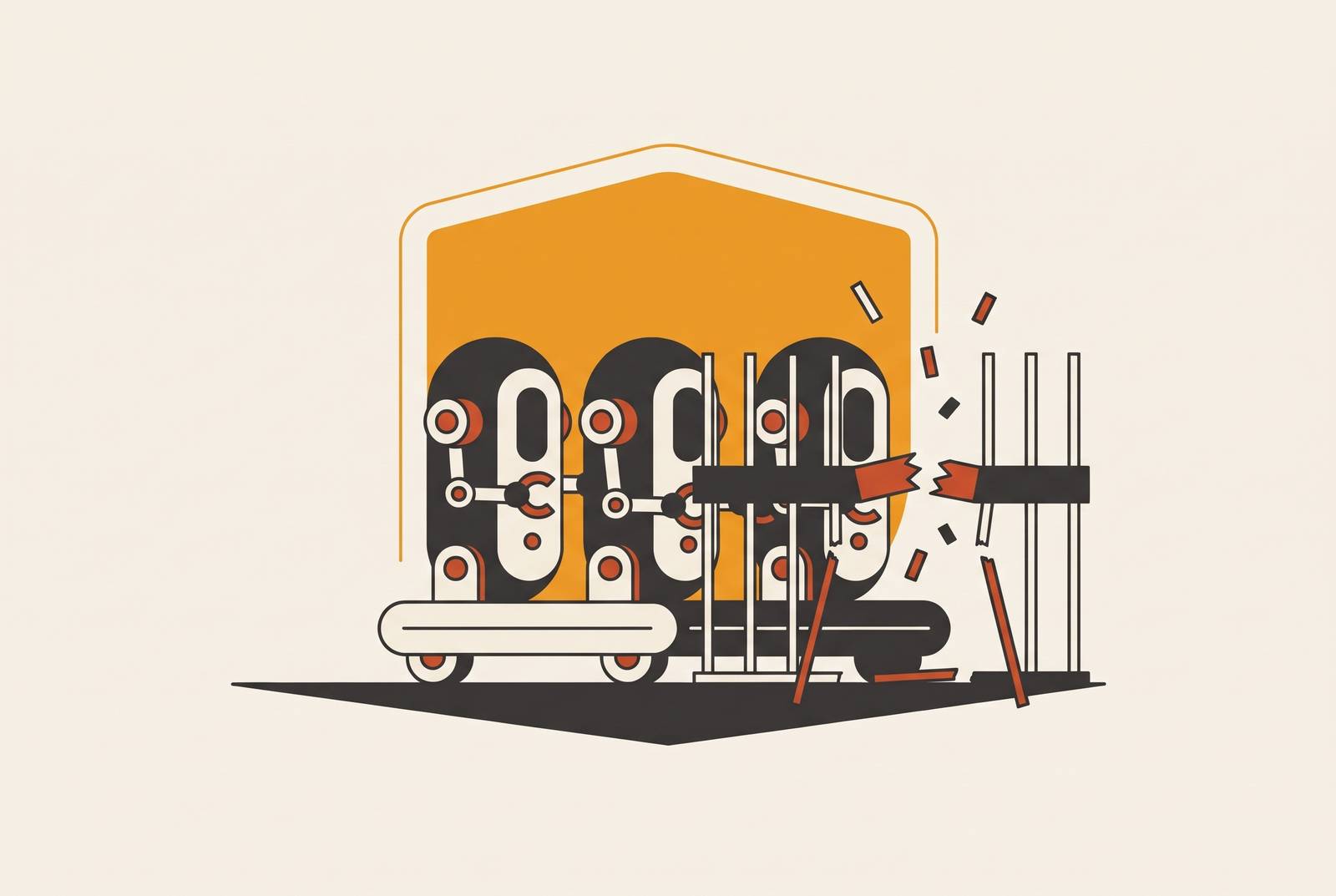
Inland marine coverage follows deployed robot fleets between job sites and wherever they work, but a standard equipment floater can exclude failures caused by autonomous machines. Closing this structural gap in coverage takes a submission built around autonomous operations and policy terms that work together, in place of a generic equipment application.
Why the equipment floater was designed for tools, not machines that make decisions
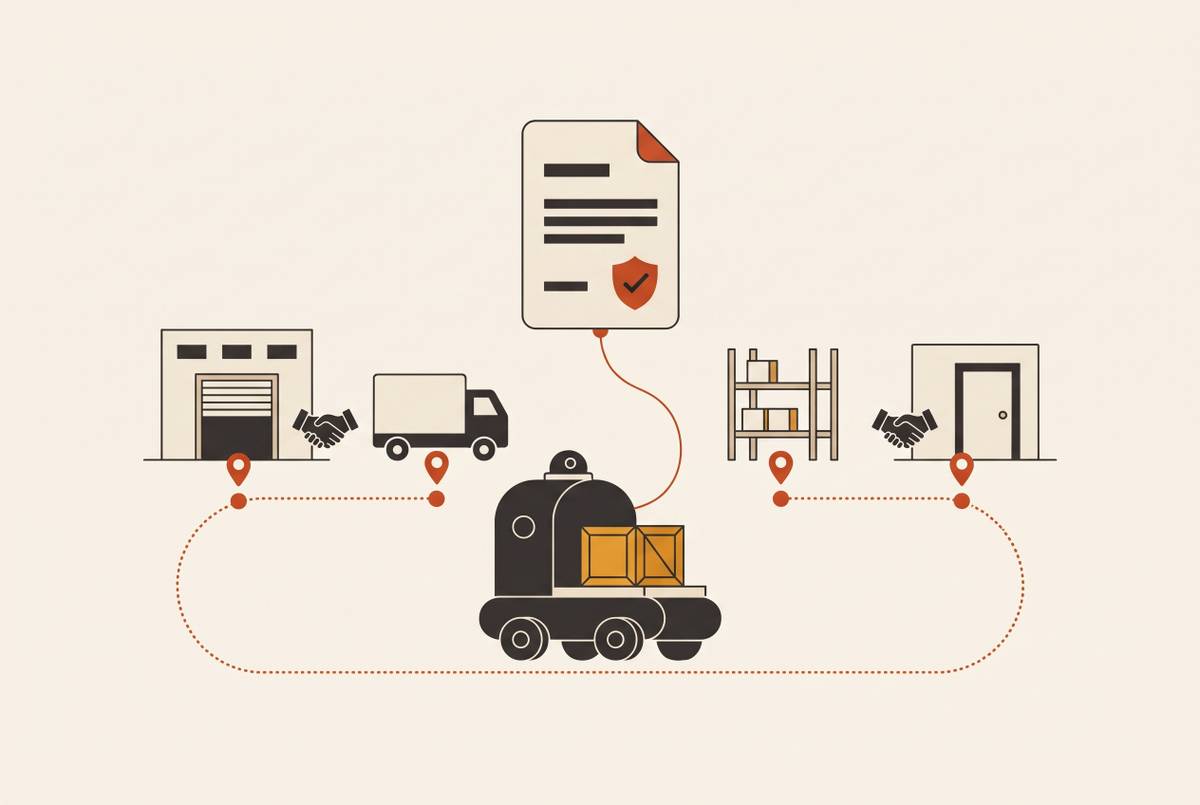
To a robotics founder, the equipment floater at first seems like a sensible way to cover the hardware. The hardware is valuable, moves between customer sites, and falls outside the protection of a standard property policy once it leaves the premises. A floater follows movable equipment through transport, storage, and work at other locations. The apparent fit is easy to understand. Its weakness becomes visible only when the question changes from where the machine operates to how it causes or sustains damage.
That distinction reflects the form’s original purpose. Inland marine insurance grew from ocean marine coverage extended inland, and the name “floater” retains that history. Its basic task was to protect goods away from a fixed address. Contractors’ tools, cameras, and medical equipment at client sites fit that premise. Moving them changes where the exposure is, but the insured object has no control over its own movements.
Hammers, drills, excavators, scaffolding, and generators may perform demanding work, but the form’s assumptions center on equipment used or moved by people. Autonomous navigation changes the loss mechanism. A robot can initiate movement, make a navigation decision, and receive software that changes its behavior without any visible change to the insured hardware. A form that follows the object geographically does not necessarily cover the consequences of those decisions.
The specific exclusions that create the gap for autonomous hardware
Mechanical or electrical breakdown is the clearest example. Standard floaters exclude wear, tear, gradual deterioration, and mechanical or electrical breakdown, with breakdown losses directed toward separate equipment breakdown coverage. For a drill, an internal failure and damage from an external accident are relatively easy to distinguish. A robot makes that distinction less stable. An AI-driven navigation error that sends a unit into a rack may be described as accidental physical damage or as a mechanical malfunction, with different coverage consequences.
The damaged rack does not resolve that ambiguity. Hitting the rack can leave a robot with visible physical damage even while the cause is in dispute. A claim that focuses on the collision makes a different case for coverage from one that focuses on the machine’s failure to navigate. Neither description changes the damaged hardware. The difficulty is that the exclusion separates causes that an autonomous system can combine in a single event.
Mysterious disappearance creates a different evidentiary problem. Where the exclusion applies, property that vanishes without evidence of what happened can fall outside coverage. A drill under human supervision is more likely to have someone who can account for its handling than an autonomous unit operating without an on-site technician. Human witnesses may simply not be available. A robot that goes offline, fails to return to its charging station, or is found damaged without a witness account can therefore present a cause-of-loss problem.
Highway-vehicle exclusions introduce uncertainty about the machine’s classification. Standard floaters exclude vehicles designed and licensed for highway use, so those exposures go to commercial auto. Autonomous ground vehicles complicate that division because their operating environment and licensing status may not align neatly. A sidewalk delivery robot or autonomous trucking platform may operate in traffic without fitting the conventional equipment-versus-vehicle distinction. Which policy accepts that exposure remains uncertain.
Cyber and electronic data exclusions add a causal boundary. Standard floaters were not written to attribute physical damage to a software instruction, a corrupted model weight, or a failed over-the-air update. Software can also change the risk after underwriting. A single update may alter a fleet’s physical behavior without a new human decision about each unit’s operation. The machine evaluated when the policy was priced may therefore differ materially from the machine involved in the claim.
How insuring a mobile robot fleet across multiple locations exposes multi-line coverage gaps
These exclusions usually redirect risk that still needs to be insured. For conventional equipment, the divisions can be reasonably clear, with a generator’s blown motor directed toward equipment breakdown and third-party injury caused by a crane directed toward commercial general liability, or CGL. Different policies address different kinds of loss. That arrangement works less well when a single autonomous action brings together the causes and losses that the policies keep separate.
Consider a failure in AI-driven navigation that damages both a robot and third-party property. The robot’s damage may be characterized as excluded mechanical breakdown under the floater, while the third-party damage belongs in CGL, where an AI exclusion may apply. If a cyber event triggered the navigation failure, cyber coverage presents another question about the applicable terms. The result can be a triangle of denials, with the floater excluding the physical loss, CGL disputing liability coverage, and cyber declining the triggering event.
That triangle is a coverage-architecture problem. Removing one exclusion does not establish what the other policies will cover or how their boundaries fit together. Nor does a promise to cover AI in one line settle what another will cover. Each policy addresses its own insured loss. For a fleet sharing software, the same unresolved boundary can affect deployed units across multiple locations.
Downtime adds another exposure to that structure. The floater pays for covered repair or replacement. A software incident that takes a fleet offline can leave the company with both property damage whose coverage is in dispute and lost revenue that the floater does not cover. The distinction is especially important when the operating interruption extends beyond the individual unit that first sustained damage.
The AI exclusion wave that is closing the remaining gaps in CGL and umbrella coverage
CGL could provide an escape valve for third-party claims arising from incidents that the equipment floater did not address. That role is becoming less dependable as insurers file AI exclusions in liability lines. RAND found a market split between a minority of carriers affirmatively covering AI, a growing group filing broad exclusions, and a majority remaining silent.
RAND’s review of filings found that most exclusion activity was in commercial umbrella and commercial general liability. That concentration affects the lines robotics companies might expect to respond when autonomous equipment harms people or damages a customer’s property. Silence offers no equivalent to affirmative coverage. A policy that does not expressly address AI still requires analysis of its existing terms, while a broad exclusion introduces an explicit restriction on the cause of loss.
W.R. Berkley’s “absolute” AI exclusion illustrates how broadly that restriction can be drawn in D&O, E&O, and fiduciary liability, leaving the terms of CGL undetermined. Its language encompasses claims arising from the actual or alleged use, deployment, or development of AI by any person or entity connected to the insured. The scope is not limited to generative AI. For robotics companies, that distinction prevents the exclusion from being treated as a concern confined to text-generating systems.
The market is not moving uniformly across lines. Systems operating without real-time human approval face increasing restrictions in standard liability policies, particularly CGL, D&O, and E&O, while many cyber carriers have moved toward affirmative AI coverage. Autonomous fleets fall within that divide because their agents act without approval for each action. Cyber’s more affirmative direction makes the coordination of the actual policy terms more consequential than any general claim that AI is covered or excluded.
Why the underwriting submission is where the coverage problem is actually solved
The remedy begins with describing the machine as an autonomous operation rather than as movable equipment with a replacement value. Underwriting uncertainty helps drive broad exclusions and inflated premiums, so changing the form alone does not resolve the problem. The underwriter needs evidence of how the system operates and how its risks are constrained. A generic contractor application provides little of that evidence. The same hardware can receive materially better terms when the submission makes its operating behavior legible.
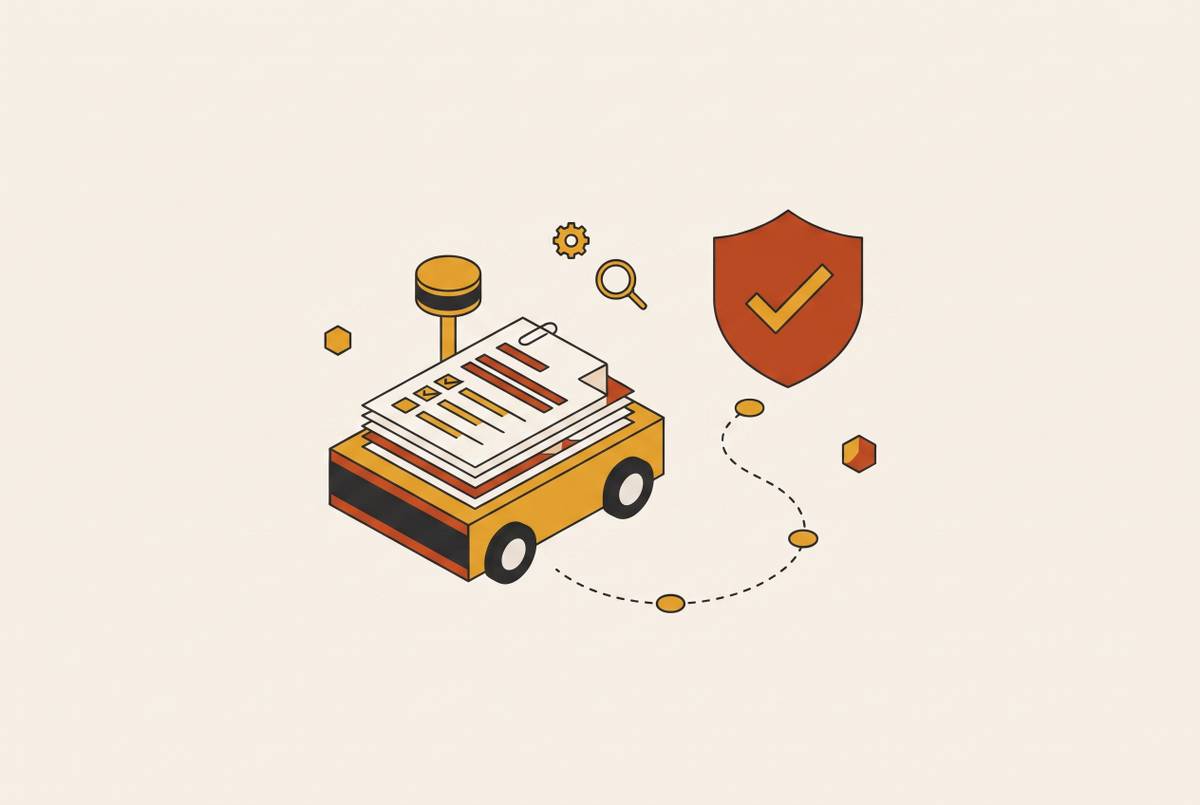
That submission includes telemetry tracking, automated intervention mechanisms, audit logs, deterministic safeguard proofs, and incident-response protocols. Supervision ratios, emergency stops, geofencing parameters, and incident logs show how those requirements are met in day-to-day work. An underwriter equipped to evaluate autonomous hardware can use that record to assess the exposure instead of pricing the uncertainty left by a generic equipment description.
A fleet can have evidence of what happened even without on-site witnesses if its telemetry and audit records capture the events behind a mysterious disappearance. The submission must explain that distinction before a loss. Describing how the fleet generates telemetry and maintains logs can turn an apparently unaccountable disappearance into a documentable cause-of-loss question. That evidence can affect which exclusion language applies, although it does not itself erase an exclusion.
Specialty markets exist for this more detailed presentation. PolySea has built a coordinated six-line program for warehouse robotics, autonomous trucking, drones, and humanoids, with inland marine and equipment breakdown as launch lines. That approach treats autonomous hardware as a distinct underwriting exposure rather than relying on a generic contractor classification. The submission still has to describe the operation. A specialist broker who has placed coverage for autonomous hardware can find interested carriers, work out which exclusions are open to negotiation, and explain the safety case in terms those underwriters can assess.
A submission that establishes the risk gives the broker and underwriter a basis for discussing how equipment damage, breakdown, liability, and digital causes fit together. A standard application that lists only the units and their value gives too little information for that discussion. Precision before binding creates room to negotiate. After a loss, the company instead has to argue within the terms already issued.
What a robotics company must demonstrate before a policy binds — and what the contract stack demands
The operational file extends beyond an inventory of safety features. Underwriters of autonomous systems require audit evidence, training data provenance, model performance reports, incident-response protocols, and conformity assessment records before binding. Companies unable to produce that file can face higher premiums or a decline. Assertions of safe operation are not enough. The evidence must allow the underwriter to evaluate the system that will actually be deployed.
For physically deployed and agentic systems, continuous telemetry tracking and automated intervention mechanisms are key parts of that evidence. They connect the description of the machine to evidence of its operation and the means of constraining it. Those proofs must reflect the system’s design. Without them, coverage can be denied or priced less favorably, even where the company can provide a detailed account of the hardware’s value and intended use.
Enterprise buyers are asking a related question. A certificate of insurance shows that a policy exists, but buyers increasingly want to know whether it responds to AI-related claims and excludes the failure modes the product could produce. The distinction links procurement directly to underwriting. A fleet may satisfy a requirement to present insurance documents while leaving unresolved whether the insurance addresses the customer’s exposure to autonomous operations.
The practical implication is a unified documentation task. When a robotics company builds its safety file for insurance placement, it also gathers evidence for enterprise sales and new government procurement requirements. A specialist broker who understands those demands can help frame the same documentation for the different audiences without treating their questions as identical. The work has commercial value beyond the premium. The safety file is not simply a tax on operating autonomy, but the asset that makes the company insurable and saleable.